
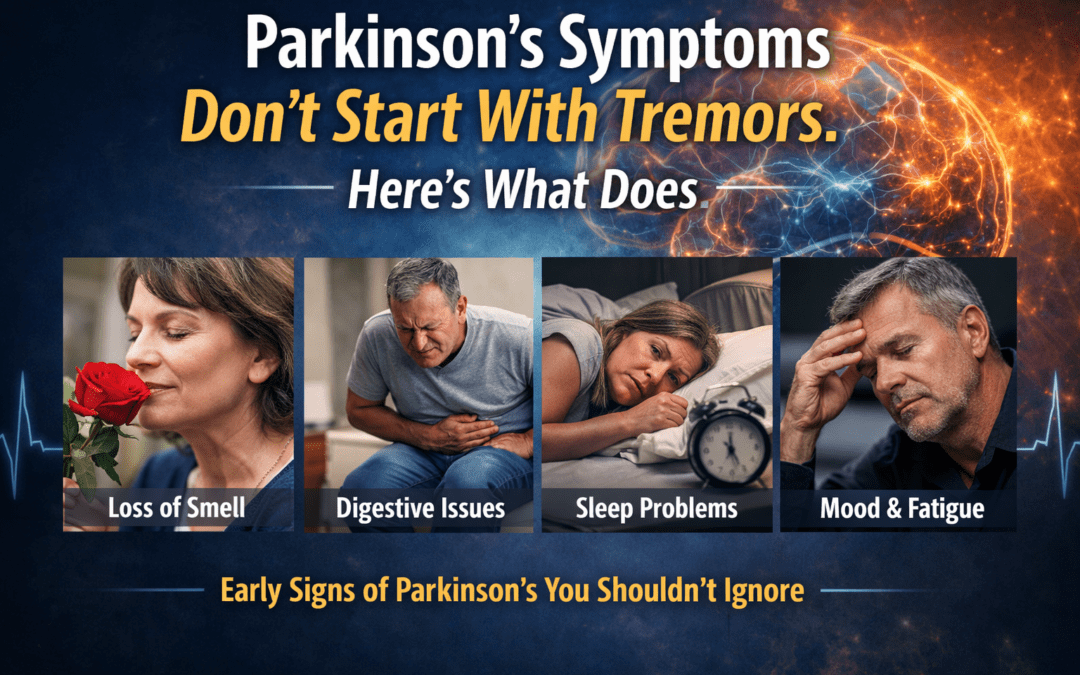
When most people think of Parkinson’s disease, they picture shaking hands. Tremors have become the poster child of Parkinson’s, and while they are common, they are often not the first sign.
For many people, Parkinson’s begins quietly. Subtly. In ways that are easy to dismiss, explain away, or blame on stress, ageing, or a busy life.
Understanding the early signs matters. Not for panic, but for awareness. Earlier recognition can mean earlier support, better planning, and a stronger sense of control over what comes next.
So if Parkinson’s does not usually start with tremors, what does it start with?
Parkinson’s Often Begins With Non Motor Symptoms
Parkinson’s is a neurological condition that affects more than movement. Long before tremors appear, changes can occur in systems that control mood, sleep, digestion, energy, and sensory processing.
These early symptoms are called non motor symptoms, and they can show up years before diagnosis.
Because they do not look like Parkinson’s, they are often overlooked.
Changes in Sense of Smell
One of the earliest and most common early signs of Parkinson’s is a reduced or lost sense of smell.
People may notice they can no longer smell coffee, perfume, or food cooking. Often this happens gradually, so it is not always obvious.
Loss of smell can occur for many reasons, but when it appears without congestion or illness, it can be an important early clue.
Persistent Constipation or Digestive Changes
Digestive issues are another early sign that is frequently missed.
Parkinson’s affects the nervous system, including the nerves that control the gut. This can slow digestion, leading to constipation that does not respond well to usual treatments.
Many people manage this symptom for years without realising it may be connected to neurological changes.
Sleep Problems That Feel Out of Character
Sleep changes often appear early and may include vivid dreams, restless sleep, or physically acting out dreams.
Some people talk, shout, or move during sleep. Others struggle with insomnia or excessive daytime fatigue.
These changes are often dismissed as stress related, but they can be an early sign of Parkinson’s affecting brain pathways involved in sleep regulation.
Mood Changes and Emotional Shifts
Depression and anxiety can appear well before any movement symptoms.
This is not simply a reaction to diagnosis or life circumstances. Parkinson’s changes brain chemistry, including dopamine and serotonin pathways that affect mood and motivation.
People may feel flat, withdrawn, or less engaged in activities they once enjoyed, often without a clear reason.
Subtle Changes in Movement
While tremors may not appear early, movement does change, just in quieter ways.
This can include:
-
Smaller handwriting
-
Reduced arm swing when walking
-
Feeling stiff or slow on one side of the body
-
Changes in posture
-
A softer voice
These changes often develop gradually and may be noticed by others before the person themselves is aware of them.
Fatigue That Does Not Match Activity Levels
Persistent fatigue is another early symptom that is easy to ignore.
This is not regular tiredness. It is a deep, ongoing lack of energy that does not improve with rest and does not always match how active someone has been.
Fatigue in Parkinson’s is neurological, not motivational.
Why These Symptoms Are Often Missed
The early signs of Parkinson’s are common experiences. Many people have poor sleep, digestive issues, or low mood at different times in their lives.
Because these symptoms do not scream Parkinson’s, they are often treated individually rather than seen as part of a bigger picture.
This is why Parkinson’s is frequently diagnosed years after symptoms first appear.
Why Early Awareness Matters
Early awareness is not about rushing into a diagnosis. It is about being informed.
Recognising patterns allows people to:
-
Advocate for themselves in medical appointments
-
Seek appropriate referrals when needed
-
Make lifestyle changes that support brain health
-
Reduce fear by understanding what is happening in the body
Knowledge creates choice. And choice creates empowerment.
Living Well Starts With Understanding
Parkinson’s is not just a condition of tremors and movement. It is complex, individual, and deeply connected to daily life.
Understanding that symptoms often begin long before tremors appear helps shift the conversation from fear to awareness, and from reaction to proactive support.
Living well with Parkinson’s starts with knowing what to look for, listening to your body, and seeking information that supports quality of life at every stage.
Welcome to Parkinson’s Lifestyle Management
Specializing in providing authoritative, experienced practical ideas and concepts for how to handle the many day to day challenges faced by Parkinson’s patients.