
Parkinson’s disease is often described as a movement disorder, but for many people, movement symptoms are only part of the story. Long before tremors or stiffness appear, Parkinson’s can quietly affect other systems in the body.
These are known as non motor symptoms, and they are some of the most common and most misunderstood aspects of Parkinson’s.
Understanding them helps people recognise patterns earlier and seek the right support.
What Are Non Motor Symptoms?
Non motor symptoms affect areas such as mood, sleep, digestion, energy, cognition, and sensory processing. They occur because Parkinson’s impacts the nervous system more broadly, not just the areas responsible for movement.
For some people, these symptoms appear years before diagnosis.
Mood Changes and Emotional Wellbeing
Depression and anxiety are common non motor symptoms of Parkinson’s. These changes are neurological, not simply emotional reactions.
People may notice:
-
Ongoing low mood
-
Increased worry or fear
-
Loss of motivation
-
Emotional flatness
Recognising that mood changes are part of Parkinson’s helps reduce stigma and encourages people to seek appropriate care.
Sleep Disturbances
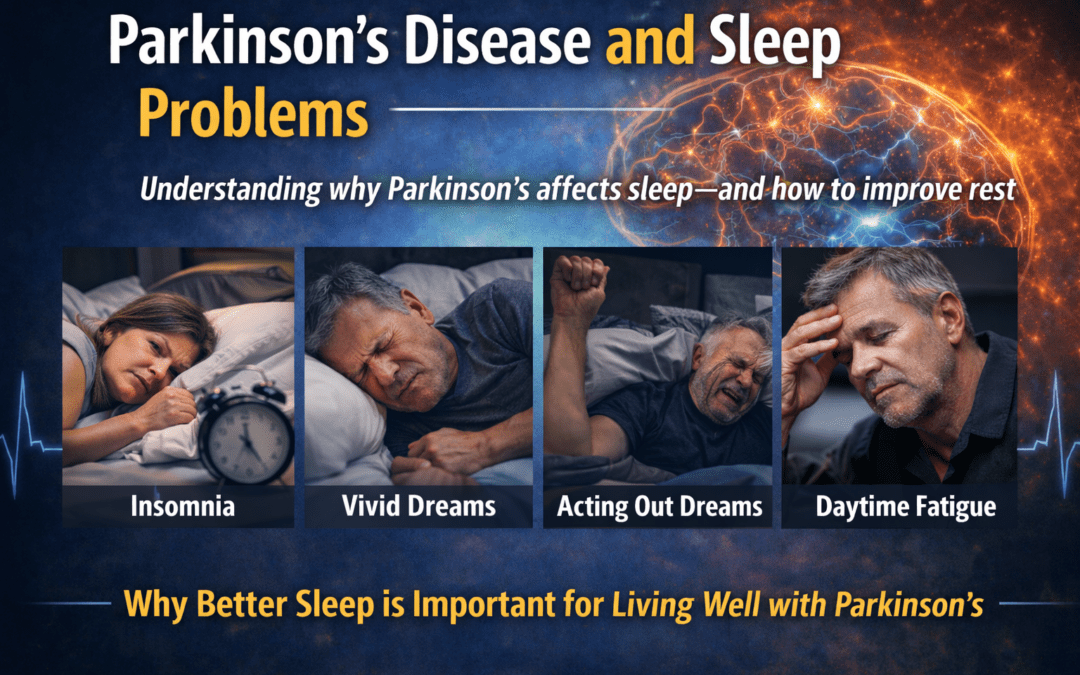
Sleep problems are one of the most common non motor symptoms.
These may include:
-
Difficulty falling or staying asleep
-
Vivid dreams or nightmares
-
Acting out dreams
-
Excessive daytime sleepiness
Poor sleep affects energy, mood, and overall quality of life, making it an important area to address.
Digestive Changes
Constipation and slowed digestion often appear early in Parkinson’s. The nervous system controls gut movement, and Parkinson’s can disrupt this process.
Persistent digestive changes that do not respond to usual strategies may be an early clue worth discussing with a healthcare professional.
Fatigue and Low Energy
Fatigue in Parkinson’s is not simply being tired. It is a deep, ongoing lack of energy that does not always improve with rest.
This symptom can be one of the most challenging to manage and often affects daily functioning more than visible movement changes.
Why Non Motor Symptoms Are Often Missed
These symptoms are common in everyday life, which makes them easy to dismiss or treat in isolation. Without awareness, the connection to Parkinson’s is often overlooked.
Education helps people advocate for themselves and seek more holistic support.
Living Well With Non Motor Symptoms
Lifestyle strategies can play a powerful role in managing non motor symptoms. Sleep routines, movement, nutrition, stress management, and emotional support all matter.
Understanding the full picture of Parkinson’s allows for better planning and a stronger sense of control.
Welcome to Parkinson’s Lifestyle Management
Specializing in providing authoritative, experienced practical ideas and concepts for how to handle the many day to day challenges faced by Parkinson’s patients.