
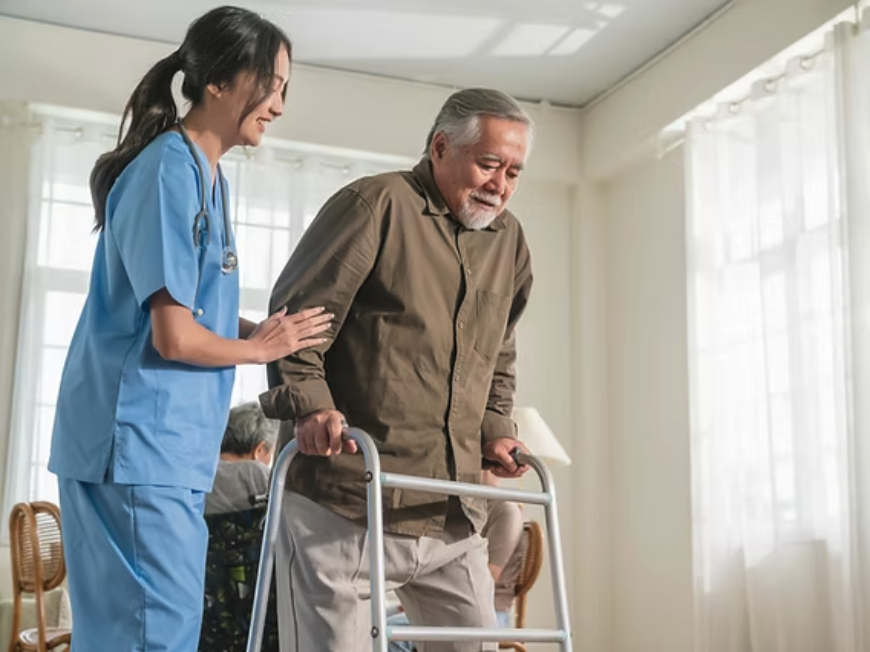
Falls are one of the most common and serious risks for people living with Parkinson’s disease. Changes in balance, slower movement, muscle stiffness, and coordination challenges can all increase the likelihood of falling. For caregivers, preventing falls becomes a crucial part of supporting safety and independence at home.
While falls can happen unexpectedly, many risks can be reduced through simple adjustments in the home, thoughtful routines, and awareness of how Parkinson’s affects mobility. Understanding why falls occur and how to minimise the risk can give both caregivers and their loved ones greater confidence moving through daily life.
This guide outlines practical strategies caregivers can use to create a safer environment and support mobility for someone living with Parkinson’s.
Why Falls Are Common in Parkinson’s Disease
Parkinson’s disease affects the brain’s ability to control movement and coordination. As dopamine levels decrease, the signals sent from the brain to the muscles become less efficient. This can lead to several physical changes that increase fall risk.
People living with Parkinson’s may experience slower reactions when adjusting their balance. Muscles may feel stiff or rigid, making it harder to recover if they begin to stumble. Walking patterns can change as well, sometimes becoming shorter, shuffling steps.
Another common symptom is known as freezing. During a freezing episode, a person may feel as though their feet are stuck to the floor, particularly when starting to walk or turning around. This sudden pause in movement can make it easier to lose balance.
Understanding these changes helps caregivers anticipate situations where falls may be more likely.
Making the Home Environment Safer
Many falls occur at home, which means caregivers have a valuable opportunity to reduce risk through simple environmental changes.
Start by looking at the home through the eyes of someone who may struggle with balance or slower movement.
Some helpful adjustments include removing loose rugs that may slip underfoot. Keeping walkways clear of furniture, cords, and clutter allows for safer movement between rooms. Good lighting is also essential, particularly in hallways and bathrooms where falls often occur.
Installing grab bars near toilets, showers, and staircases can provide extra support. Non-slip mats in bathrooms and kitchens help prevent slipping on wet surfaces.
Even small changes can significantly reduce the likelihood of a fall.
Supporting Safe Walking
Walking may become slower or less stable as Parkinson’s progresses. Caregivers can support safe movement by encouraging steady, controlled walking rather than rushing.
Allow extra time when moving from one place to another. Rushing often increases the risk of losing balance.
Encourage your loved one to focus on taking larger, deliberate steps rather than shuffling. Some people find it helpful to count steps aloud or walk to a steady rhythm.
When freezing occurs, visual cues can help restart movement. Stepping over a line on the floor or gently shifting weight from side to side may help the person begin walking again.
If recommended by a healthcare professional, mobility aids such as walking sticks or walkers can provide additional stability.
Helping with Transitions and Standing Up
Many falls occur when someone tries to stand up from a chair or get out of bed.
Caregivers can support this process by encouraging a slow, steady approach. The person should move forward in their seat, place their feet firmly on the floor, and push up using their legs rather than relying solely on their arms.
Chairs with armrests are often easier to rise from than low or soft couches.
If assistance is needed, caregivers should support the person from the side rather than pulling them upward. This helps maintain balance and prevents strain for both individuals.
Encouraging Exercise for Balance and Strength
Exercise is one of the most effective ways to maintain mobility and reduce fall risk for people living with Parkinson’s.
Activities that improve strength, flexibility, and balance can help stabilise movement and support coordination.
Gentle walking, stretching exercises, physiotherapy programs, yoga, and tai chi are often recommended for individuals with Parkinson’s.
Encouraging regular movement throughout the day can help prevent stiffness and maintain muscle strength.
Always consult with healthcare professionals before beginning new exercise routines to ensure they are appropriate and safe.
Paying Attention to Fatigue
Fatigue is a common symptom of Parkinson’s and can significantly increase fall risk.
When someone is tired, their reaction times may slow and their balance may become less stable.
Caregivers can help by pacing activities throughout the day and allowing for regular rest breaks. Planning more demanding tasks during times when energy levels are highest can also reduce risk.
Listening to the body’s signals and avoiding overexertion is an important part of fall prevention.
Monitoring Medication Effects
Medication plays an important role in managing Parkinson’s symptoms, but it can also influence movement and balance.
Some medications may cause dizziness or fluctuations in mobility throughout the day. Caregivers may notice that their loved one moves more easily at certain times after medication and experiences more stiffness or slowness at other times.
Keeping track of these patterns can help identify when additional caution may be needed during movement.
If dizziness or balance issues appear suddenly, it is important to consult a healthcare professional.
Choosing Supportive Footwear
Footwear can have a surprising impact on stability.
Shoes with good grip and firm support can help reduce slipping and improve balance. Soft slippers, loose sandals, or shoes with smooth soles may increase fall risk.
Encouraging comfortable, well-fitted shoes with non-slip soles can provide additional confidence when walking.
Building Confidence Through Awareness
Fear of falling can sometimes lead people with Parkinson’s to move less, which can weaken muscles and increase fall risk over time.
Caregivers can help build confidence by creating a safe environment and encouraging gradual movement rather than avoiding activity altogether.
Providing reassurance and support during daily tasks can help the person maintain independence while feeling secure.
Moving Forward Safely
Preventing falls is not about eliminating movement. In fact, staying active is one of the best ways to maintain strength and mobility for people living with Parkinson’s.
By making thoughtful adjustments to the home, encouraging safe movement habits, and staying aware of changing symptoms, caregivers can significantly reduce fall risks.
With the right support, individuals living with Parkinson’s can continue to move through their daily lives with confidence, dignity, and greater safety.