
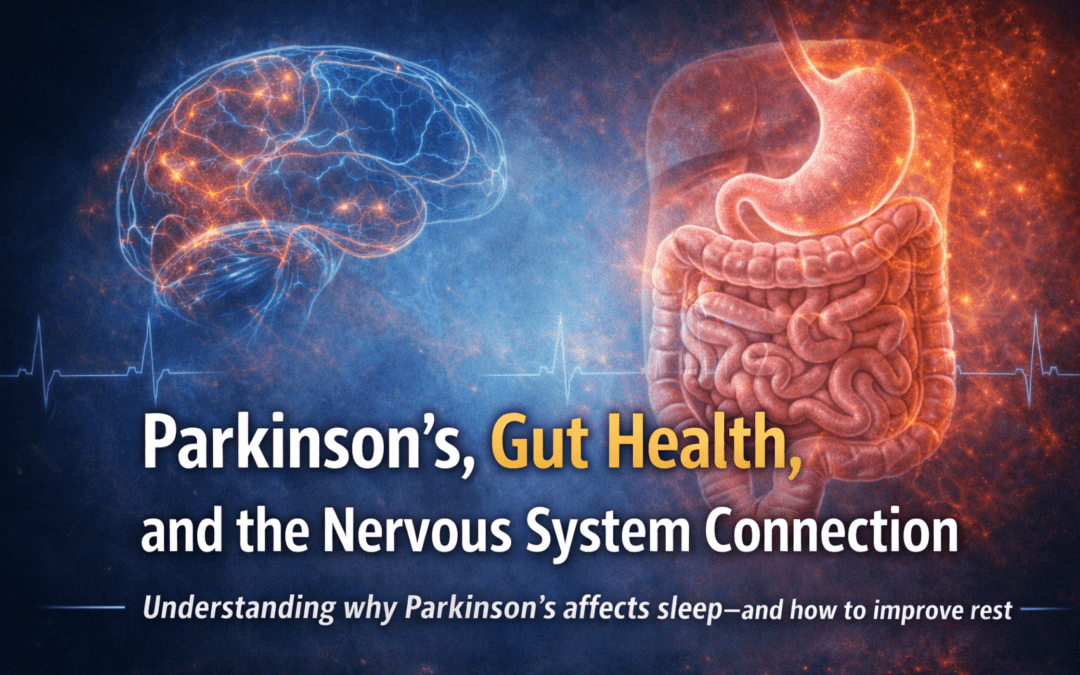
The gut and brain are closely connected through the nervous system. In Parkinson’s disease, this connection is often affected early, leading to digestive symptoms that may appear long before diagnosis.
Understanding the gut’s role helps people manage symptoms more effectively.
How Parkinson’s Affects Digestion
Parkinson’s impacts the nerves that control gut movement. This can slow digestion and lead to constipation, bloating, and discomfort.
These symptoms are common and often underestimated in their impact on daily life.
The Gut Brain Connection
The gut and brain communicate constantly. Changes in gut function can influence mood, energy, and medication absorption.
Supporting gut health is an important part of living well with Parkinson’s.
Common Digestive Symptoms
People may experience:
-
Chronic constipation
-
Feeling full quickly
-
Bloating
-
Irregular bowel habits
These symptoms are neurological in origin, not simply dietary.
Supporting Digestive Health
Lifestyle strategies such as hydration, movement, routine, and stress management all support digestion. Individualised approaches work best and should be discussed with healthcare professionals.
Why Gut Health Matters
Better digestion supports comfort, nutrition, medication effectiveness, and overall wellbeing. Addressing gut health early can improve quality of life at every stage.
Welcome to Parkinson’s Lifestyle Management
Specializing in providing authoritative, experienced practical ideas and concepts for how to handle the many day to day challenges faced by Parkinson’s patients.